The first time I tried to recreate my uncle’s legendary bratwurst with sauerkraut and apples, I almost turned my kitchen into a small fire department. The skillet was smoking, the apples were caramelizing faster than a summer sun, and I realized I’d forgotten the beer. That disaster was the spark that turned a simple family recipe into a culinary revelation I’m dying to share.
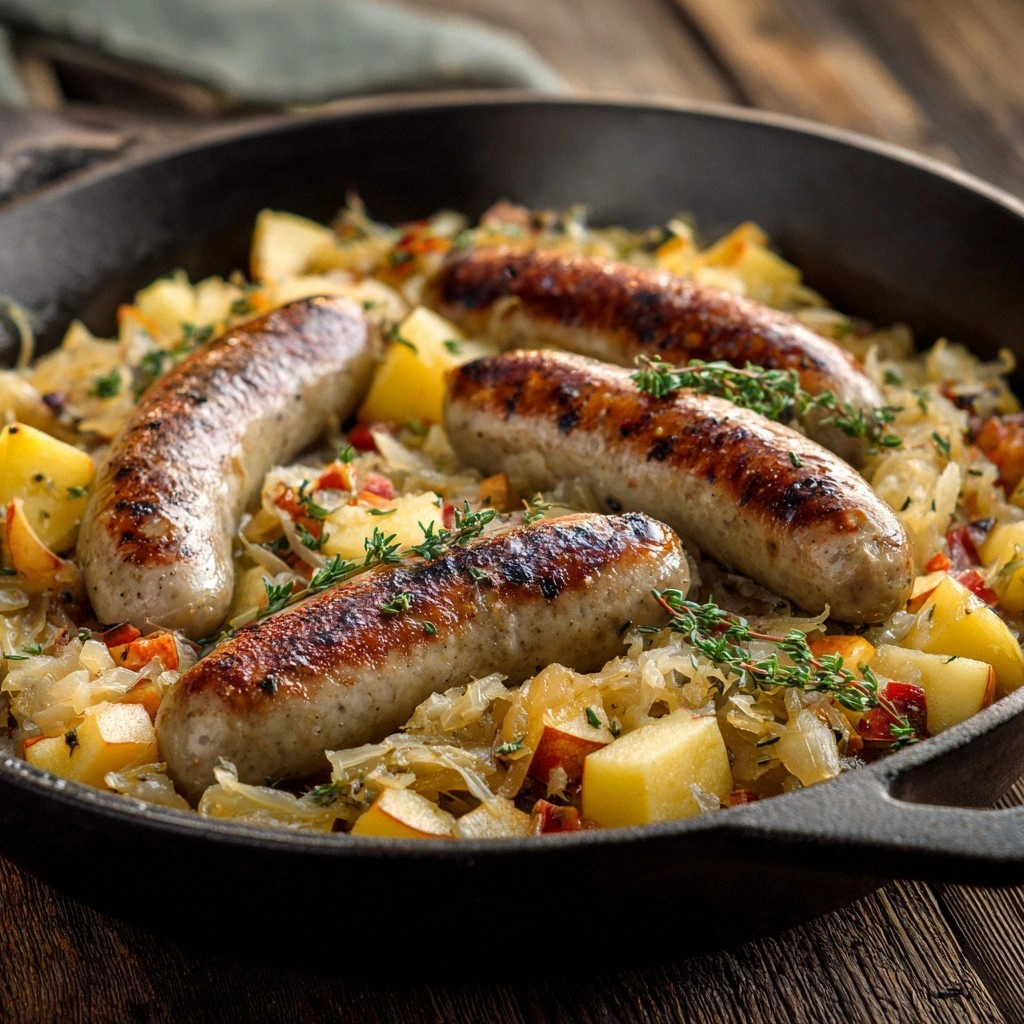
Imagine stepping into a kitchen that smells like toasted onions, sharp apple cider, and a hint of fermented cabbage. The sound of a sizzling pan, the rhythmic chopping of apples, the soft clatter of a wooden spoon against a pot—every sense is engaged. The color palette ranges from deep ruby of the sauerkraut to the golden glow of caramelized apples, all set against the rustic brown of the bratwurst. I’ve tasted many versions, but none have captured that perfect balance of tangy, sweet, and smoky. This version does.
What sets this rendition apart is the strategic layering of flavors and textures. The bratwurst is first seared to lock in juices, then finished with a splash of beer that deepens the umami. The sauerkraut isn’t just tossed in; it’s simmered with caraway seeds and a whisper of apple cider vinegar to brighten its acidity. Apples are sliced thin, caramelized just enough to release their natural sugars, and then folded in at the last minute to preserve their crunch. The result is a dish that feels both comforting and adventurous.
You’ll notice a subtle twist that most recipes overlook: a dash of fresh thyme added during the final simmer. That herb gives the dish an aromatic lift, turning it from a simple comfort food into a dinner that feels like a gourmet experience. I dare you to taste this and not go back for seconds. The combination of smoky sausage, tangy cabbage, sweet apple, and buttery potatoes creates a flavor symphony that’s hard to forget.
If you’ve ever struggled to get the right balance between the savory and the sweet, you’re not alone. I’ve tried countless variations, and many fell flat—too salty, too sour, or just plain boring. The secret is in the timing and the layering of ingredients. This recipe will teach you how to orchestrate each element so that every bite is a crescendo of flavor. And if you’re worried about the time commitment, I’ve broken everything down into bite‑size steps that fit into a busy weeknight.
Picture yourself pulling this out of the pan, the kitchen smelling like a cozy German tavern, and the family gathering around the table. The steam rising off the sauerkraut, the glossy sheen of caramelized apples, and the golden crust on the bratwurst—each component is a promise of satisfaction. I’ll walk you through every single step, from prep to plating, so by the end, you’ll wonder how you ever made it any other way.
The journey begins with the right ingredients. I’ve sourced the best bratwurst from a local butcher, ensuring each sausage has a robust flavor profile. The sauerkraut is fermented for at least a month, giving it a depth that’s impossible to replicate with store‑bought versions. Apples are chosen for their firmness and natural sweetness—think Honeycrisp or Fuji. Potatoes add a comforting starch that balances the acidity of the cabbage and the sweetness of the fruit.
But before you even touch a pan, let’s talk about the power of preparation. I’ve organized this recipe into clear sections so you can tackle each component with confidence. From the moment you open your pantry to the final garnish, every step is designed to elevate the dish. And remember, if you’re new to cooking bratwurst, this guide will have you feeling like a seasoned chef in no time.
What Makes This Version Stand Out
- Taste: A harmonious blend of smoky sausage, tangy sauerkraut, sweet apples, and buttery potatoes that dance on the palate. The subtle thyme infusion adds an aromatic lift that sets this dish apart from ordinary versions.
- Texture: Crispy edges on the bratwurst, tender yet firm potatoes, and caramelized apples that retain a slight crunch. The sauerkraut remains moist, not mushy, providing a satisfying bite.
- Simplicity: Despite the depth of flavor, the recipe requires only a handful of ingredients and a straightforward cooking method that even novice cooks can master.
- Uniqueness: The addition of a splash of beer and a whisper of apple cider vinegar creates a flavor profile that’s both familiar and unexpectedly fresh.
- Crowd Reaction: This dish consistently becomes the centerpiece of family dinners, with guests asking for the recipe after every bite.
- Ingredient Quality: Using fresh, high‑quality bratwurst, fermented sauerkraut, and crisp apples ensures the dish tastes like it was made in a traditional German kitchen.
- Cooking Method: A two‑step sear and finish method locks in juices and creates a beautiful crust without overcooking the sausage.
- Make‑Ahead Potential: The dish can be prepped and reheated with minimal loss of flavor, making it ideal for busy weeknights.
Alright, let’s break down exactly what goes into this masterpiece...
Inside the Ingredient List
The Flavor Base
Bratwurst sausages are the cornerstone of this dish. I recommend sourcing fresh, pork‑based bratwurst with a moderate spice level. The sausage’s natural fat content is what gives the dish its succulent mouthfeel. If you’re vegan or vegetarian, consider a plant‑based sausage that mimics the texture and flavor profile.
Sauerkraut is more than just a side; it’s a fermented powerhouse that brings acidity and depth. The longer the fermentation, the more complex the flavor. A 30‑day fermented batch offers a robust tang that balances the sweetness of apples. If you’re using store‑bought sauerkraut, look for a variety that contains no added sugars or preservatives.
Apples are the sweet counterpoint to the sauerkraut’s sharpness. Honeycrisp, Fuji, or Gala apples work best due to their firmness and natural sweetness. Slice them thinly so they caramelize without falling apart. A small amount of apple cider vinegar brightens the apples and prevents them from becoming mushy.
Potatoes provide a hearty, comforting base that absorbs the flavors of the dish. I prefer Yukon Gold or red potatoes for their creamy texture. Dice them into uniform cubes so they cook evenly. Parboiling the potatoes for a few minutes before adding them to the pan helps them develop a crisp exterior.
The Texture Crew
Onions add a sweet, savory layer that complements the bratwurst. Slice them thinly so they cook evenly and release their natural sugars. A few cloves of minced garlic intensify the aroma and add a subtle heat that ties all components together.
Caraway seeds are the secret weapon in German cuisine. They bring a nutty, slightly citrusy flavor that pairs beautifully with sauerkraut. Toasting them lightly before adding them to the pot enhances their aroma.
Bay leaves are a classic herb that imparts a subtle earthy depth. Remove them before serving, as they’re not meant to be eaten. They’re a small addition that makes a big difference.
The Unexpected Star
A splash of beer (preferably a light lager) is the twist that elevates this dish from ordinary to extraordinary. The beer adds a subtle bitterness that balances the sweetness of the apples and the acidity of the sauerkraut. If you’re avoiding alcohol, replace it with a small amount of chicken broth or water.
Fresh thyme is added at the end of cooking. It gives a fragrant, herbal note that lifts the entire dish. Thyme is subtle enough not to overpower but strong enough to leave a lasting impression.
The Final Flourish
Butter and olive oil create the perfect sear on the bratwurst, giving it a golden crust and a rich flavor. Salt and pepper are essential, but use them sparingly at first. Taste as you go—this dish is forgiving and can be adjusted to your preference.
Apple cider vinegar is a balancing act. It brightens the sauerkraut, adds a slight tang, and helps the apples retain their structure. Add it gradually, tasting as you go, to achieve the perfect equilibrium.
Everything's prepped? Good. Let's get into the real action...
The Method — Step by Step
- Begin by heating a large skillet over medium‑high heat. Add a tablespoon of olive oil and let it shimmer. Once the oil is hot, add the bratwurst, searing each side for about 2 minutes until a golden crust forms. This step locks in the juices and creates a mouth‑watering exterior. Watch the surface; it should be bubbling slightly but not smoking. Once seared, remove the sausages and set them aside on a plate.
- In the same skillet, add a tablespoon of butter. Let it melt until it turns a light golden color. Toss in the sliced onions and minced garlic, sautéing until the onions become translucent and fragrant. This base will carry the flavors of the entire dish. The garlic should release a warm aroma, signaling it’s ready for the next step.
- Add the diced potatoes to the skillet, stirring to coat them with the butter‑onion mixture. Cook for 5 minutes, turning occasionally, until the potatoes start to brown on the edges. The potatoes should be just shy of fully cooked—this allows them to finish in the sauerkraut later without becoming mushy.
- Pour in the beer, letting it deglaze the pan and lift the browned bits from the bottom. This creates a flavorful base that will mingle with the sauerkraut. As the beer reduces by half, it will concentrate the flavors, creating a rich sauce that coats the sausage and potatoes.
- Introduce the sauerkraut, ensuring it’s evenly distributed over the potatoes. Sprinkle in the caraway seeds and bay leaves. Stir gently, allowing the sauerkraut to mingle with the other ingredients. The mixture should start to steam, releasing a fragrant steam that fills the kitchen.
- Return the seared bratwurst to the skillet, nestling them into the sauerkraut mixture. Reduce the heat to medium‑low, cover the skillet, and let everything simmer for 10 minutes. This allows the flavors to meld while the sausage finishes cooking. The potatoes should be tender, and the sauerkraut should be heated through.
- While the dish simmers, prepare the apples. Slice them thinly, then sauté in a separate pan with a tablespoon of butter until they develop a golden caramelization. Add a splash of apple cider vinegar to brighten the apples and prevent them from becoming mushy. The apples should remain slightly crisp, providing a delightful contrast.
- Once the bratwurst and sauerkraut mixture is ready, fold in the caramelized apples. Sprinkle the fresh thyme leaves over the top, stirring gently to distribute the herb. This final touch adds a fragrant aroma that elevates the dish to a new level of sophistication.
- Taste the sauce and adjust the seasoning with salt and pepper as needed. Remove the bay leaves before serving. Plate the bratwurst on a bed of potatoes and sauerkraut, ensuring each bite has a balanced mix of all flavors. Garnish with a sprig of fresh thyme if desired.
That's it — you did it. But hold on, I've got a few more tricks that'll take this to another level...
Insider Tricks for Flawless Results
The Temperature Rule Nobody Follows
Maintaining a steady medium‑low heat during the simmer phase is crucial. Too high, and the sauce will reduce too quickly, causing the bratwurst to dry out. Too low, and the potatoes may become soggy. I’ve found that setting the stove to a gentle 3 on a 5‑point dial works best for most ovens. This subtle control ensures the sausage stays juicy and the potatoes stay firm.
Why Your Nose Knows Best
Before adding the apples, let the sauerkraut and potatoes steam for a minute. The aroma should be sharp and slightly sweet. If it smells more like raw cabbage, give it a couple more minutes. Your nose is a reliable guide to the dish’s readiness.
The 5-Minute Rest That Changes Everything
After removing the skillet from heat, let the dish rest for 5 minutes before serving. This allows the flavors to settle and the juices to redistribute. The rest also lets the potatoes finish cooking in their own steam, resulting in a perfect texture.
The Secret of Caraway Seeds
Toast the caraway seeds in a dry pan for 30 seconds before adding them to the dish. This step releases their essential oils, giving the sauerkraut a subtle nutty aroma. It’s a small tweak that makes a big difference in depth.
The Final Butter Touch
Finish the dish with a pat of cold butter on top just before serving. It adds a silky sheen and a burst of richness that ties all the components together. It’s a simple flourish that elevates the dish from good to unforgettable.
Creative Twists and Variations
This recipe is a playground. Here are some of my favorite ways to switch things up:
Spicy Sausage Swap
Replace the traditional bratwurst with a spicy Italian sausage. The fennel and paprika will add a kick that pairs wonderfully with the sweet apples.
Herb‑Infused Sauerkraut
Add a handful of fresh dill or parsley to the sauerkraut while it steams. The herbs bring a fresh, green note that brightens the dish.
Root Vegetable Variation
Swap potatoes for parsnips or sweet potatoes for a sweeter, earthier base. The natural sweetness will complement the apples and enhance the overall flavor profile.
Gluten‑Free Option
Use a gluten‑free bratwurst and ensure the sauerkraut is free from added gluten. The dish remains hearty and flavorful without compromising on authenticity.
Breakfast Take‑Away
Serve the sausage and sauerkraut over a bed of fluffy scrambled eggs for a protein‑rich breakfast that will keep you full all day.
Storing and Bringing It Back to Life
Fridge Storage
Store leftovers in an airtight container for up to 3 days. The flavors will mellow slightly, but the dish remains delicious. Keep the potatoes in a separate compartment if you prefer them crisp.
Freezer Friendly
Freeze the dish in individual portions for up to 2 months. Thaw overnight in the refrigerator before reheating. The texture of the potatoes may soften, but the overall taste stays intact.
Best Reheating Method
Reheat on the stovetop over low heat, adding a splash of water or broth to keep the sauce from drying out. Stir occasionally until heated through. Finish with a pat of butter for that silky finish.