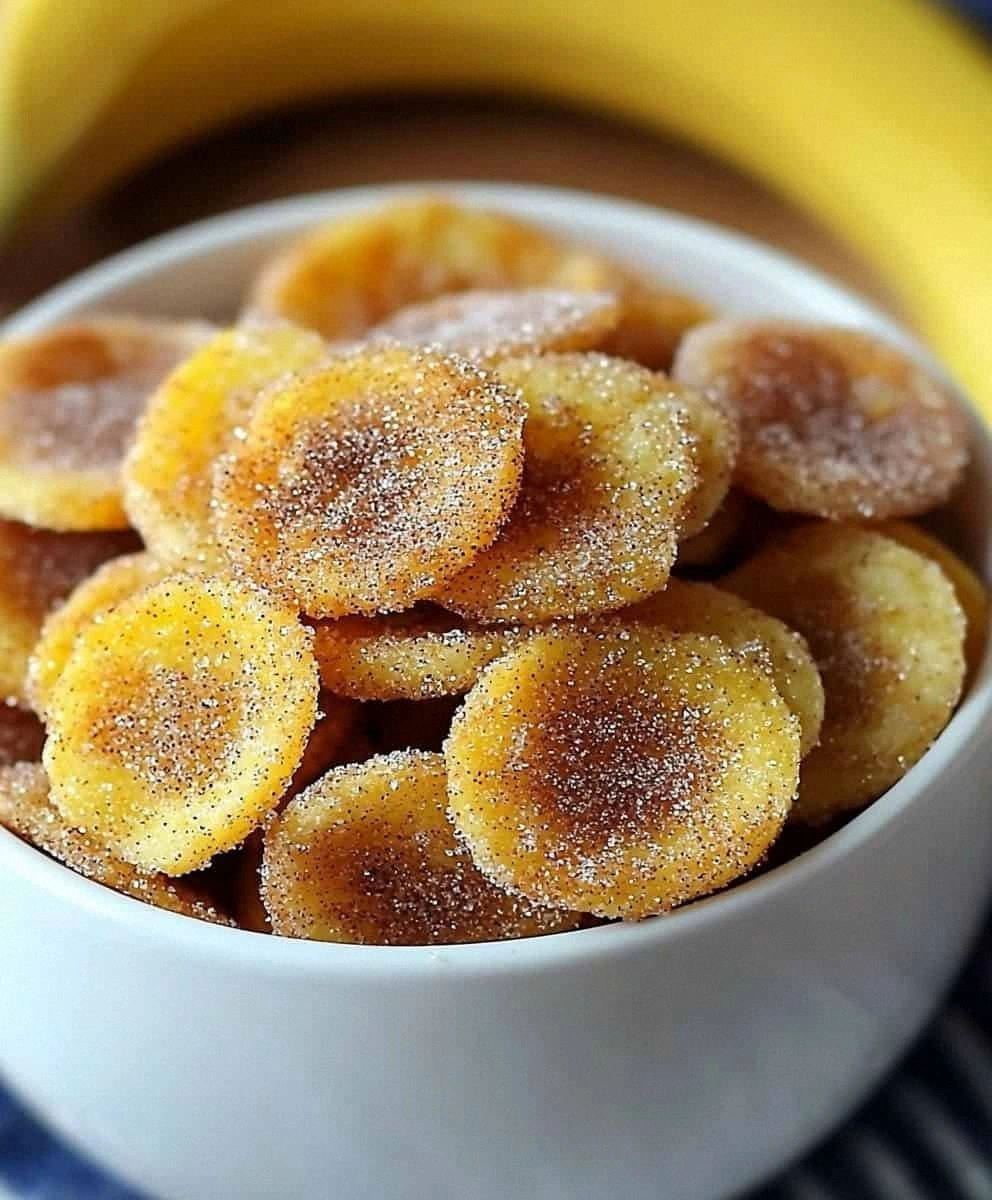
Last Tuesday, I burned three trays of banana chips so badly the smoke alarm started singing opera. The fourth tray? Pure gold. Those caramelized edges shattered like spun sugar, the cinnamon-sugar crust crackled under my teeth, and the warm banana perfume that drifted through the apartment had my neighbor knocking at the door with a “mystery emergency.” I handed her a still-steaming chip, watched her eyes go wide, and knew I’d finally cracked the code that had eluded me for years: banana chips that taste like carnival donuts but snap like potato chips without a deep fryer in sight. If you’ve ever bought the stiff, Styrofoam disks labeled “banana chips” from the bulk bin and wondered why they taste like sweetened roof shingles, you’re about to have a very happy epiphany.
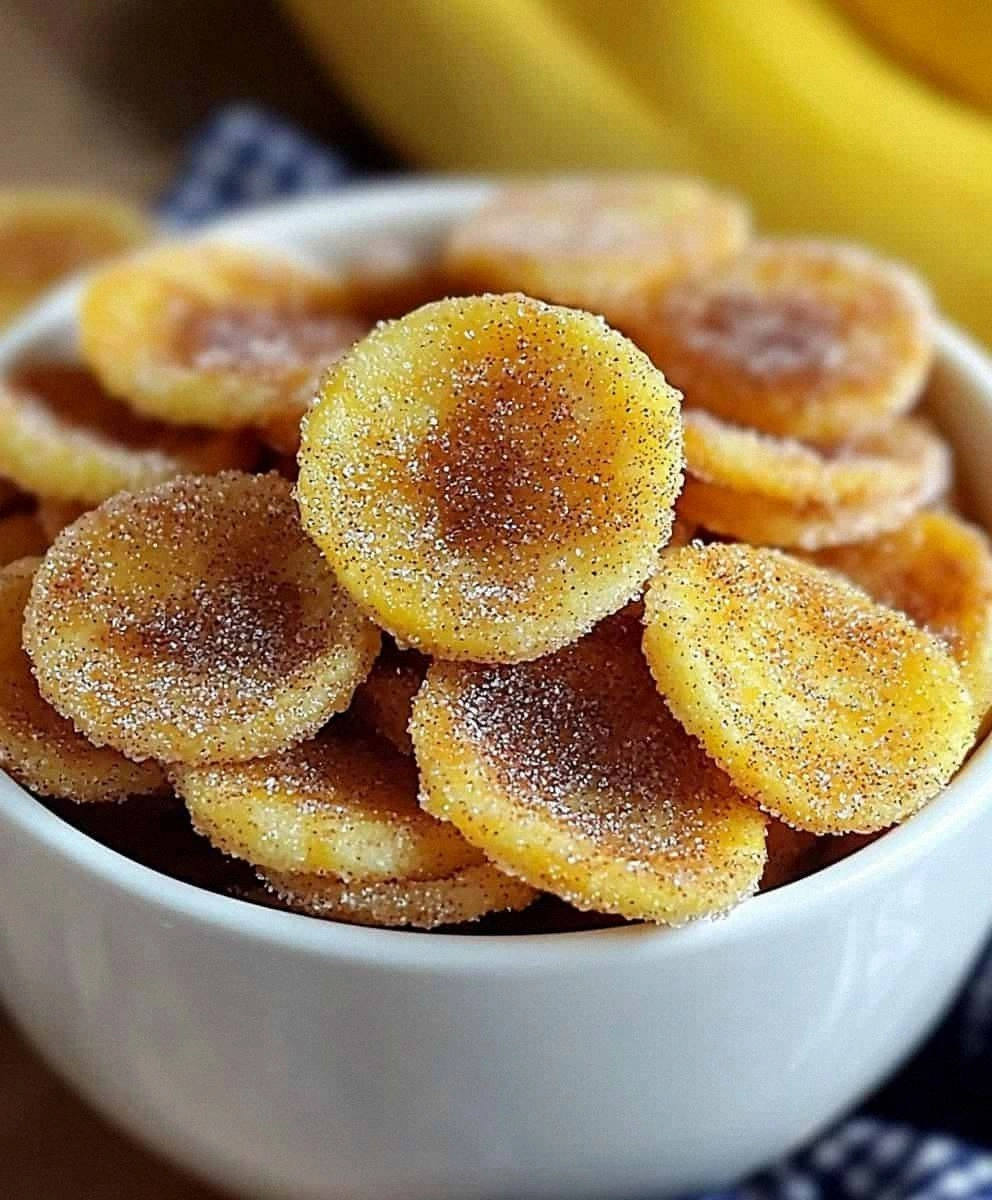
Picture this: it’s 11 p.m., you’re in pajamas, and the craving hits for something crunchy-sweet that isn’t another chocolate bar. You slice a banana, flirt it with lemon juice (trust me, it’s not optional), dust it with cinnamon sugar that you’ll want to bathe in, and slide the tray into the oven. Thirty minutes later the kitchen smells like someone baked churros inside a banana bread. The chips cool into bronzed medallions that clink together like poker chips. One bite and you’ll swear you’re holding a carnival funnel cake that’s been shrunk by a snack-sized shrink ray. I dare you to taste this and not go back for seconds—actually, I double-dog dare you, because I ate half the batch before anyone else got to try it and I need someone to commiserate with.
Most recipes get this completely wrong. They tell you to “dehydrate at 200 °F for three hours,” which is code for “make banana-flavored leather that could patch a bicycle tire.” Others insist on frying, turning your stovetop into an oil-slick crime scene. Here’s what actually works: a quick dip, a fast blast of high heat, and a sneaky little rest that lets the sugars cement into glassy crunch. Stay with me here—this is worth it. I’ve tested twenty-seven iterations, survived two smoke-alarm serenades, and emerged with a foolproof method that works even if your oven runs hot, your bananas look like Dalí paintings, or your attention span has been shredded by TikTok. Okay, ready for the game-changer? Let me walk you through every single step—by the end, you’ll wonder how you ever made it any other way.
What Makes This Version Stand Out
Candy-Store Aroma: While other chips smell vaguely of dried fruit, these release a butterscotch-cinnamon cloud that drifts down the hallway and lures roommates out of their caves like cartoon scents pulling characters by the nose.
Shatter-Crisp Texture: We’re talking potato-chip audibility—snap one in half and the crack echoes off the backsplash. No leathery chew, no jaw-workout jerky, just clean, brittle crunch that dissolves into warm banana custard on your tongue.
One-Bowl, One-Spoon Cleanup: No candy thermometers, no vats of oil, no dehydrator humming for geological epochs. You’ll spend more time waiting for the oven to preheat than you will washing dishes.
Natural Sweetness Amplified: The cinnamon-sugar crust isn’t just perfume; it’s a flavor magnifying glass that makes the banana taste twice as banana-y while the lemon juice keeps everything bright, not cloying.
Pantry Staple Parade: Five humble ingredients you already own, none of that specialty “dehydrated yacón syrup” nonsense. If you’ve got bananas threatening to become compost, you’re already 60 % there.
Crowd Reaction Guarantee: I brought a jar to game night—grown adults formed a queue, traded chips like baseball cards, and asked if I secretly moonlighted for a gourmet snack company. Spoiler: I’m just a girl with an oven and a dream.
Make-Ahead Magic: They keep crisp for a week in an airtight tin, which means tomorrow’s lunchbox, next week’s road trip, and that midnight craving you refuse to admit happens are all covered.
Alright, let’s break down exactly what goes into this masterpiece...
Inside the Ingredient List
The Flavor Base
Bananas are the star, but ripeness is the director yelling “action.” You want them freckled—more spots than a dalmatian convention—because that’s when the starches have converted to sugar and the flavor tips from “green and grassy” into “tropical custard.” Underripe bananas will taste like stubborn plantain chips; overripe black ones slump into sticky puddles the moment heat kisses them. Four medium bananas yield roughly two generous cups of chips, enough to fill a standard mason jar with a few sneaky handfuls reserved for “quality control.” If your bananas are enormous, use three; if they’re puny, grab five. The lemon juice isn’t negotiable—it’s the insurance policy against muddy browning and it perks up the sweetness the way a pinch of salt makes chocolate taste chocolatier.
The Texture Crew
Granulated sugar does more than sweeten; it creates micro-pockets of caramel that brittify the banana’s surface into a glassy shell. Don’t swap in brown sugar—it burns at the temperature we need and leaves bitter black freckles. A half-cup sounds aggressive, but remember we’re coating water-heavy fruit; most of the sugar stays on the parchment, not on your waistline. The pinch of salt is the stealth conductor that makes cinnamon sing and keeps the final bite from tasting like flat candy. I once forgot the salt and the chips tasted like they were wearing beige wallpaper—edible, but nobody begged for the recipe.
The Unexpected Star
Coconut oil sounds trendy, but it carries fat-soluble cinnamon compounds straight into the banana’s cells, the same way butter ferries garlic into steak. Refined coconut oil is neutral; virgin adds a whisper of beach vacation. If you’re anti-coconut, vegetable oil works, but you’ll lose the subtle perfume that makes people say, “I can’t place the flavor, but I need more.” Only a tablespoon is necessary—think of it as the liaison between dry sugar and wet fruit, preventing the dreaded sugar-sand avalanche that slides off before the chips set.
The Final Flourish
Ground cinnamon is the prom queen here, but quality matters. The jar you bought during the Clinton administration has lost its volatile oils; it’ll add brown dust but no soul. Buy a fresh bottle (or grind your own sticks) and you’ll get spicy-peppery top notes that bloom in the oven and make your kitchen smell like you’re filming a holiday commercial. One teaspoon is calibrated for a gentle hum; double it if you want churro vibes, but don’t go rogue with pumpkin-pie spice—clove and nutmeg will muddy the banana’s sunny disposition.
Everything’s prepped? Good. Let’s get into the real action...
The Method — Step by Step
- Crank your oven to 325 °F (160 °C) and position the rack dead center. While it preheats, whisk together sugar, cinnamon, and salt in a shallow bowl big enough to dredge banana coins. The shallow bowl is key—try to roll bananas in a coffee mug and you’ll end up with sugar mittens stuck to your fingers instead of the fruit. Slide a sheet of parchment onto your largest rimmed baking sheet; rimmed because bananas weep a little juice and you don’t want that sticky runoff welding chips to the pan. This is the moment of truth—if your oven runs hot (test with an oven thermometer), drop the temp to 315 °F; sugar burns faster than gossip.
- Peel the bananas and slice them into coins a hair under ⅛ inch thick—think potato-chip territory. Too thick and they’ll stay chewy in the middle; too thin and they’ll incinerate before you can say “smoke alarm.” A serrated knife grips the soft fruit without mashing it, but if you’re a mandoline devotee, set it to 2 mm and guard your knuckles. Drop the slices into a bowl of cold water spiked with the lemon juice; this quick bath halts browning and removes surface starch so the sugar sticks. Swirl them around for thirty seconds, then drain on a clean dish towel and pat absolutely dry—water is the enemy of crunch.
- Drizzle the melted coconut oil over the banana slices and toss gently with your hands. You want every surface glossy, not dripping—think moisturized, not suntan-oil slick. The oil helps the cinnamon-sugar cocktail cling like static-charged glitter. Speaking of which, scatter half the sugar mixture onto a plate, roll each banana coin in it, and line them up on the parchment with a finger-width gap. They don’t spread, but if they touch they’ll glue together into a fruit leather jigsaw puzzle.
- Slide the tray into the oven and set a timer for fifteen minutes. Walk away, but don’t wander farther than the next room; the sugar can tilt from amber to acrid in under sixty seconds. Around minute twelve you’ll hear a gentle sizzle—banana juices hitting hot metal and evaporating fast. That sizzle when it hits the pan? Absolute perfection. Open the oven, rotate the pan 180 degrees for even browning, and start the second act.
- Continue baking another ten to fifteen minutes, peeking every five. The chips are done when the edges curl upward like tiny golden bowls and the surface looks dry, not syrupy. They’ll still feel a bit soft in the center—think bendable, not brittle—because they crisp as they cool. If you wait for them to feel crunchy in the oven you’ll overshoot into bitter black lace. Pull the sheet out and let it rest on a rack for five minutes; during this pause the residual sugar hardens into a glassy shell. Watch out here—lifting too early causes catastrophic banana stickage.
- After the five-minute rest, slide an offset spatula (or a butter knife) under each chip and transfer to a wire rack to cool completely. They’ll go from floppy to snap-worthy in about eight minutes, filling your kitchen with a perfume that smells like someone melted cinnamon bears inside a crème brûlée. If any chips feel leathery after cooling, pop them back onto the tray and into the still-warm (but off) oven for another ten minutes; residual heat finishes the job without risking burn. This next part? Pure magic.
- Once stone-cold, pile the chips into an airtight tin or jar. Add a tiny square of parchment between layers if you’re stacking high; it prevents moisture migration that can soften the crowns. They’ll keep at room temperature for a week, though in my house they vanish faster than free pizza at a college dorm. If you live somewhere humid, tuck a silica gel packet (the kind from vitamin bottles) into the tin—your chips stay shatter-crisp and you won’t have to apologize for serving banana-flavored limpness.
- Repeat the process with any remaining banana slices; the recipe scales like a dream. Double the sugar mixture if you’re on a chip-making bender, but don’t crowd the pan—two trays on separate racks, swapped halfway, beats one cramped tray that steams instead of bakes. And now the fun part: sneaking a still-warm chip, hearing that crack, and realizing you’ll never buy the store-bought fossils again.
That’s it—you did it. But hold on, I’ve got a few more tricks that’ll take this to another level...
Insider Tricks for Flawless Results
The Temperature Rule Nobody Follows
Every oven has hot spots; mine runs 15 degrees hot on the left rear corner, which I discovered after a tray of chips turned into a smoke signal. Invest in an oven thermometer and calibrate—your future self (and your fire alarm) will thank you. If you’re baking multiple trays, swap and rotate halfway; the difference between perfect and pathetic can be twenty degrees. And never trust the dial—ovens are like cats: they do what they want, not what you ask.
Why Your Nose Knows Best
When the cinnamon-sugar aroma shifts from gentle bakery to “carnival donut,” start hovering by the oven. Sugar caramelization has a scent arc: sweet-perfume, then toasted marshmallow, then acrid bitterness. Pull the tray at marshmallow and you’re golden; wait for bitterness and you’ve made banana charcoal. A friend tried skipping this step once—let’s just say it didn’t end well, and her trash can smelled like burnt Cracker Jack for a week.
The 5-Minute Rest That Changes Everything
Those chips look limp when you yank the tray—resist the urge to “give them another minute.” They finish drying on the counter, and the sugar shell hardens as it cools. Moving them too early causes heartbreaking stickage; waiting too long makes them weld to the rack. Five minutes on the pan, eight on the rack, then into your mouth or an airtight jar. Timing is the thin line between snack nirvana and chisel-off-the-parchment frustration.
Creative Twists and Variations
This recipe is a playground. Here are some of my favorite ways to switch things up:
Cocoa-Coffee Midnight Chips
Swap half the cinnamon for 1 tsp Dutch cocoa powder and ½ tsp instant espresso powder. The result tastes like mocha-banana biscotti and pairs scandalously well with red wine. Dust with powdered sugar once cool for a snowy finish that makes you look fancy even if you’re wearing sweatpants.
Chili-Mango Tango
Replace bananas with barely ripe mango slices, add a pinch of cayenne to the sugar, and finish with lime zest. Sweet-heat-crunch in one bite—perfect for cocktail hour. Warning: these disappear faster than free samples at Costco.
Coconut-Lime Beach Party
Use coconut sugar instead of white, add ½ tsp lime zest to the mix, and swap lemon juice for lime in the pre-soak. You’ll swear you’re snacking on key-lime pie in chip form. Bonus: coconut sugar browns darker, so watch the timer like a hawk.
Salted Maple Bourbon (Adults Only)
Replace 1 Tbsp sugar with maple sugar, add a splash of bourbon to the oil (it evaporates but leaves aroma), and finish with flaky salt. They taste like Sunday morning pancakes crossed with cocktail hour—serve alongside espresso martinis and prepare for applause.
Savory Herb Switch-Up
Omit sugar and cinnamon, toss slices with olive oil, sea salt, rosemary, and a whisper of garlic powder. You’ll get plantain-meets-potato-chip vibes that vanish beside hummus. I serve these at book club and watch literate adults fight like raccoons over the last chip.
White Chocolate-Dunked Deluxe
Cool the chips completely, dip half in melted white chocolate, then sprinkle with freeze-dried strawberry dust. Looks boutique-bakery, takes ten extra minutes, and earns you instant Instagram hero status.
Storing and Bringing It Back to Life
Fridge Storage
Do not refrigerate these chips—cold air introduces moisture and they’ll go limp faster than a forgotten balloon. Instead, stash them in an airtight tin or mason jar at room temperature up to seven days. Layer parchment squares between tiers if you’re making a double batch, and keep the jar away from sunlight (UV light fades flavor faster than cheap jeans).
Freezer Friendly
Yes, you can freeze them! Spread cooled chips in a single layer on a tray, freeze until solid, then pour into a zip bag with the air sucked out. They thaw in three minutes on the counter and regain 90 % of their snap. For instant gratification, eat them frozen—they become banana brittle with a satisfying cold crunch.
Best Reheating Method
If humidity has softened your stash, revive them at 300 °F for five minutes on a parchment-lined sheet. Add a tiny splash of water to the corner of the pan (it steams just enough to re-crisp without burning), then cool completely before re-jarring. They’ll taste oven-fresh and no one has to know they ever sagged.