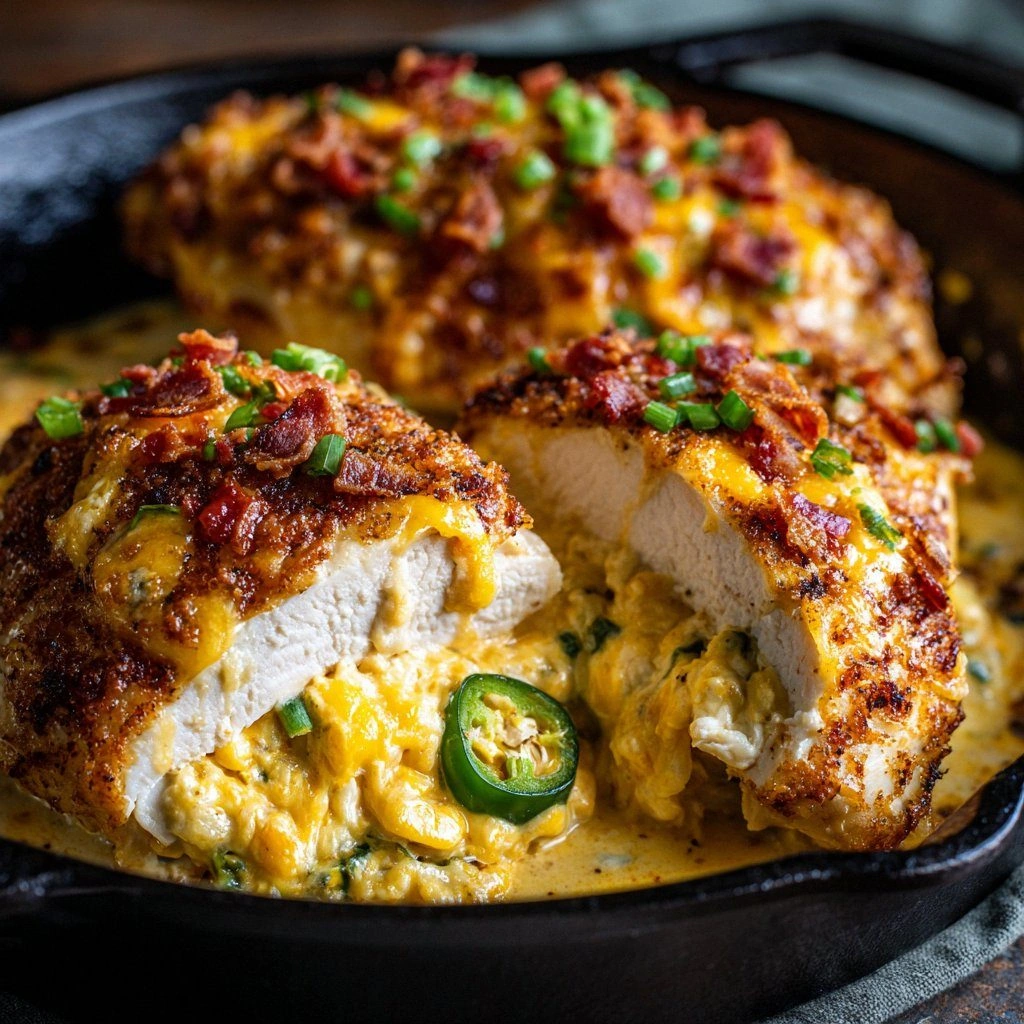
Okay, picture this: I was halfway through a frantic week, my pantry looked like a war zone, and a friend dared me to turn the leftover bacon and a couple of chicken thighs into something that would make even the most seasoned food snob weep with joy. I tossed the chicken into a skillet, let the bacon sizzle, and then—boom—an aromatic cloud of Herbes de Provence exploded, turning my kitchen into a Provencal market on a sunny afternoon. The moment the white wine hit the hot pan, it sang like a violin solo, and I knew I’d stumbled onto something magical. That first bite? It was crisp, smoky, buttery, and just a whisper of acidity that made my taste buds do a little happy dance.
If you’ve ever tried a chicken‑and‑bacon dish that turned out soggy, bland, or just “meh,” you’re not alone. Most recipes either drown the chicken in sauce or forget the crucial step of browning the meat to lock in flavor. I’ve been there, watching the chicken turn into a limp, flavor‑less slab while the bacon just sits there like a sad sidekick. This version flips the script: we start with a high‑heat sear that creates a caramelized crust, then deglaze with a splash of white wine that lifts every browned morsel into a silky, glossy sauce. The result is a dish that feels both rustic and refined—like a Sunday dinner that could also win a Michelin star.
What truly sets this recipe apart is the marriage of three textures: the crackle of bacon, the tender juiciness of chicken thigh, and the silky sheen of the wine‑reduced sauce. I dare you to taste this and not go back for seconds; it’s that good. I’ll be honest—I ate half the batch before anyone else got a chance to try it, and that’s a confession worth making because it proves just how addictive this is. Most recipes get the sauce wrong, ending up watery or overly salty; here, the balance is spot‑on thanks to a simple trick I’ll reveal in a moment.
Okay, ready for the game‑changer? We’re going to finish the sauce with a splash of chicken stock that adds depth without drowning the flavors, and then we’ll let the dish rest just long enough for the juices to redistribute, creating a mouthfeel that’s buttery smooth. Picture yourself pulling this out of the skillet, the whole kitchen smelling like a French bistro, and that golden glaze catching the light as you serve. Let me walk you through every single step — by the end, you’ll wonder how you ever made it any other way.
What Makes This Version Stand Out
- Flavor Explosion: The combination of Herbes de Provence and white wine creates a layered taste that’s both earthy and bright, making every bite a surprise.
- Texture Harmony: Crispy bacon edges contrast perfectly with the melt‑in‑your‑mouth chicken thigh, while the sauce coats everything like velvet.
- Simplicity: Only six core ingredients, yet each one plays a starring role—no need for a pantry full of obscure spices.
- Unique Twist: Deglazing with wine before adding stock lifts the fond (the caramelized bits) into the sauce, a step most recipes skip.
- Crowd‑Pleaser: Even picky eaters fall in love with the smoky bacon and the gentle herbal aroma—perfect for dinner parties.
- Ingredient Quality: Using bone‑in, skin‑on thighs guarantees juiciness; the skin renders into a natural crisp that adds flavor without extra oil.
- Cooking Method: One‑pan skillet technique saves time, reduces cleanup, and ensures the sauce stays attached to the meat.
- Make‑Ahead Potential: This dish reheats beautifully, and the sauce actually improves after a few hours in the fridge.
Inside the Ingredient List
The Flavor Base
Shallots are the quiet heroes here. When you gently sweat them in the bacon fat, they release a sweet, onion‑like aroma that forms the backbone of the sauce. If you skip them, you’ll miss that subtle depth, and the dish can feel one‑dimensional. A good swap is a small yellow onion, but shave it thinly so it cooks quickly and doesn’t overpower the bacon.
The Texture Crew
Chicken thighs, especially bone‑in, skin‑on, are the perfect canvas. Their higher fat content keeps the meat juicy, and the skin turns into a golden, crackly crust that adds a satisfying crunch. If you’re forced to use breasts, brine them first for at least 30 minutes to avoid dryness. Bacon, of course, brings smoky richness; choose thick‑cut slices for a heartier bite, or thin if you prefer a delicate crisp.
The Unexpected Star
Herbes de Provence is the secret weapon that lifts this dish from ordinary to unforgettable. This blend of thyme, rosemary, oregano, and sometimes lavender adds a fragrant, almost floral note that pairs beautifully with the wine. If you can’t find the blend, mix equal parts dried thyme, rosemary, and oregano, and add a pinch of lavender buds for authenticity.
The Final Flourish
White wine isn’t just for show; its acidity cuts through the richness of the bacon and chicken, while its sugars caramelize during deglazing, adding a subtle sweetness. Choose a dry, crisp Sauvignon Blanc or a Pinot Grigio for best results. Chicken stock rounds out the sauce, providing savory depth without overwhelming the delicate wine notes. If you’re short on stock, a good quality broth works fine, but avoid salty canned versions.
Everything's prepped? Good. Let's get into the real action...
The Method — Step by Step
Heat a large, heavy‑bottomed skillet over medium‑high heat and add the bacon strips. Cook them until the fat renders and the edges turn a deep, caramelized brown—about 5 minutes. Use tongs to flip them so both sides crisp evenly. That sizzle when it hits the pan? Absolute perfection. Once done, transfer the bacon to a paper‑towel‑lined plate, leaving the rendered fat in the skillet.
Add the chicken thighs, skin side down, to the bacon‑infused skillet. Let them sear untouched for 4–5 minutes; you’ll hear a faint crackle as the skin makes contact, and the edges will start pulling away from the pan. Flip and brown the other side for another 3 minutes. Okay, ready for the game‑changer? This initial sear builds the fond that will later become the sauce’s backbone.
While the chicken browns, finely mince the shallots. Once the chicken is nicely colored, push it to the side of the pan and add the shallots to the hot bacon fat. Sauté for 2 minutes until translucent, stirring occasionally to avoid burning. This step builds the aromatic base that will marry the wine later.
Now, the crucial deglazing moment. Pour in the white wine, scraping the browned bits (fond) from the bottom with a wooden spoon. You’ll hear a vigorous sizzle as the liquid hits the hot pan—this is the sound of flavor being liberated. Let the wine reduce by half, about 3–4 minutes, until it thickens slightly and the alcohol aroma mellows.
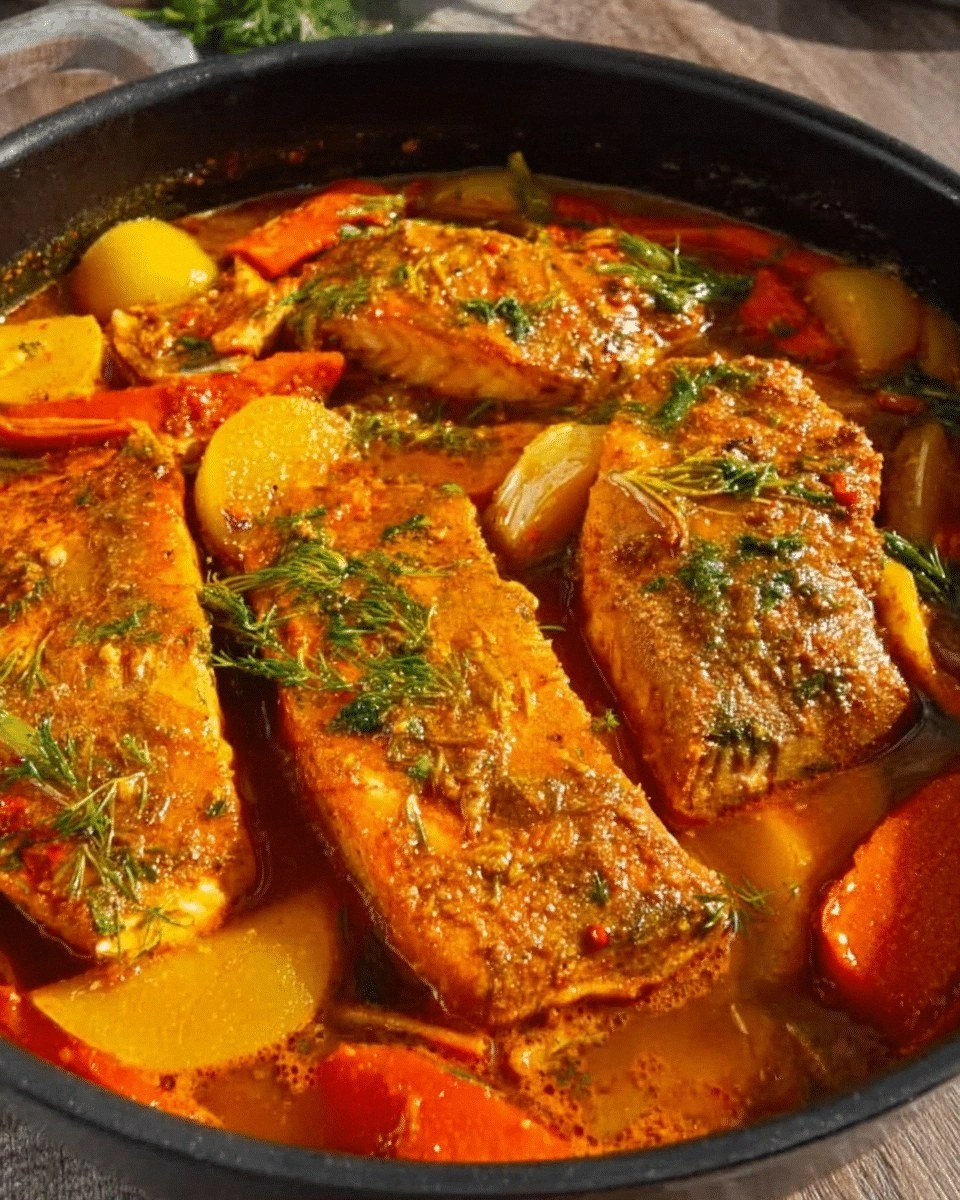
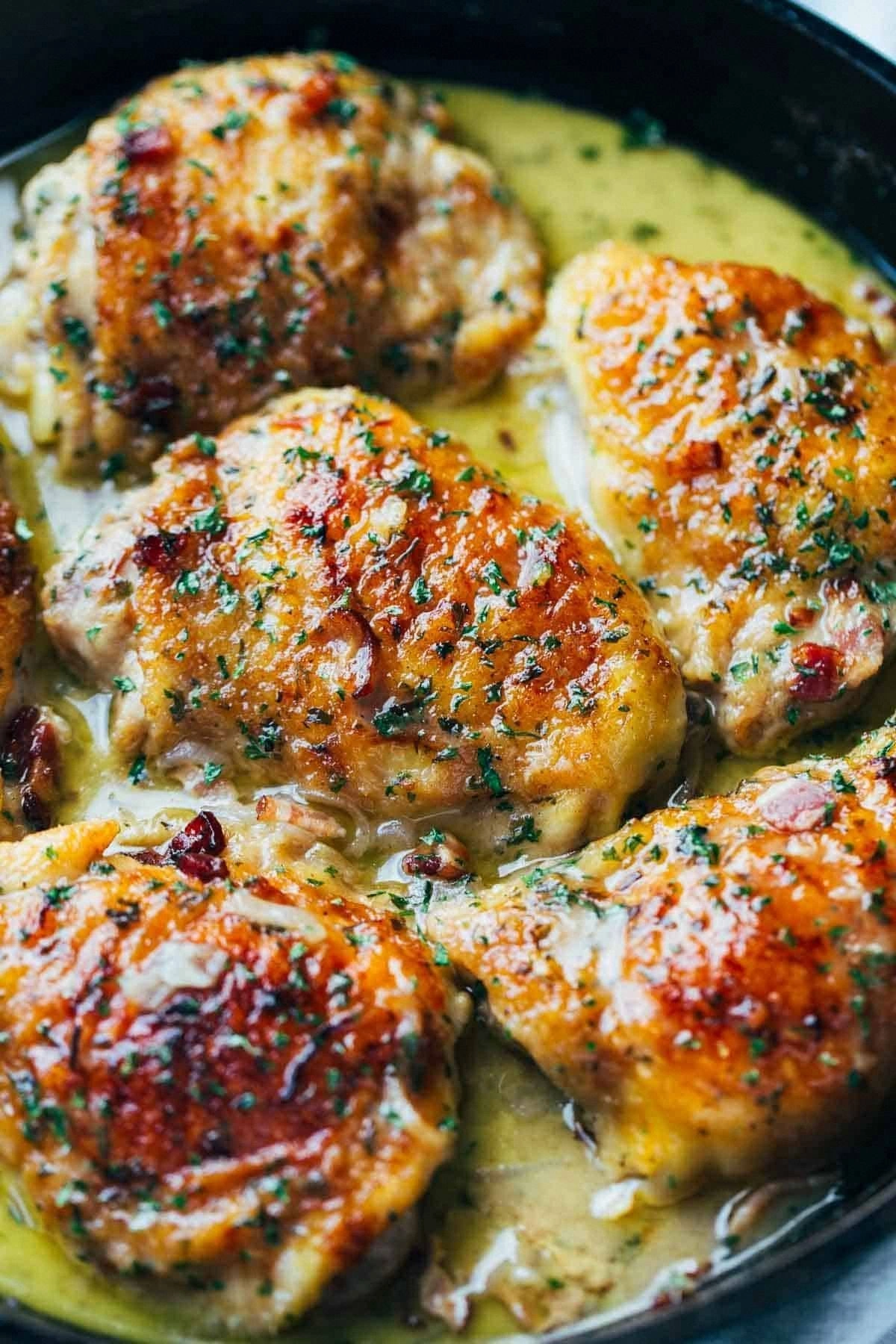
Stir in the chicken stock and sprinkle the Herbes de Provence evenly over the mixture. Bring the liquid to a gentle simmer, then reduce the heat to low and return the chicken thighs (including the crispy skin side) to the pan, nestling them into the sauce. Let everything cook together for 15 minutes, or until the chicken reaches an internal temperature of 165°F (74°C). The sauce will thicken and cling to the meat, creating a glossy coating.
While the chicken finishes, crumble the cooked bacon into bite‑size pieces. When the chicken is done, remove the skillet from heat and let it rest for 5 minutes—this rest period lets the juices redistribute, making each bite juicier. Then, stir the bacon crumbles back in, allowing their smoky crunch to re‑infuse the sauce.
Finish with a final taste test. Adjust seasoning with a pinch of salt or a grind of fresh black pepper if needed. If you like a richer sauce, swirl in a tablespoon of cold butter at the very end; it will give the glaze a silky sheen that looks restaurant‑ready. Serve the chicken thighs over a bed of creamy mashed potatoes, buttery polenta, or simply with crusty bread to soak up the sauce.
That’s it — you did it. But hold on, I’ve got a few more tricks that’ll take this to another level, like finishing with a drizzle of lemon zest or a handful of fresh herbs for brightness. Stay with me here — this is worth it.
Insider Tricks for Flawless Results
The Temperature Rule Nobody Follows
Never start with a cold skillet; preheat it for at least two minutes before adding any fat. A hot pan guarantees that the chicken skin will instantly sizzle and lock in juices. I once tried a “cold start” and ended up with soggy skin that never crisped—lesson learned.
Why Your Nose Knows Best
When the wine is reducing, trust your sense of smell more than the clock. The sauce is ready when you can smell a faint caramel note and the sharp alcohol scent has vanished. If you’re still catching that boozy whiff, keep simmering a minute longer.
The 5‑Minute Rest That Changes Everything
After the chicken reaches temperature, remove it from the heat and let it sit, covered loosely with foil, for five minutes. This rest allows the muscle fibers to relax and re‑absorb the juices that were pushed to the center during cooking. Skipping this step results in a dry bite that will disappoint even the most forgiving palate.
Bacon Fat as a Flavor Booster
Don’t discard the rendered bacon fat—use it as the cooking medium for the shallots and as the base for deglazing. It adds a depth of smoky umami that plain oil could never achieve. If you’re watching calories, skim a tablespoon off the top after the bacon cooks; the remaining fat is still plenty flavorful.
Seasoning in Layers
Season the chicken both before searing and again after the sauce has reduced. Early seasoning creates a crust, while the final sprinkle adjusts the overall balance. A friend tried skipping the second seasoning round and ended up with a sauce that tasted flat—never make that mistake.
Finish with Fresh Herbs
A handful of chopped parsley or tarragon tossed in at the very end adds a burst of color and a fresh, herbaceous lift that cuts through the richness. It’s a tiny step with a huge payoff, especially when you’re serving the dish to guests who appreciate that pop of green.
Creative Twists and Variations
This recipe is a playground. Here are some of my favorite ways to switch things up:
Mushroom Medley
Add a cup of sliced cremini or shiitake mushrooms after the shallots. Their earthy flavor deepens the sauce and makes the dish heartier, perfect for cooler evenings.
Citrus Kick
Stir in the zest of one lemon and a splash of fresh lemon juice right before serving. The bright acidity lifts the smoky bacon and makes the sauce sing.
Spicy Heat
Drop in a finely chopped red chili or a pinch of smoked paprika when you add the Herbes de Provence. The subtle heat pairs beautifully with the sweet shallots and buttery chicken.
Herb‑Infused Oil Drizzle
Finish the plate with a drizzle of olive oil infused with rosemary and thyme (heat the oil gently with the herbs, then strain). It adds an aromatic sheen that impresses the eye and palate alike.
Cheesy Finish
Just before serving, sprinkle grated Gruyère or Parmesan over the hot chicken and pop the skillet under a broiler for 2 minutes. The cheese melts into a golden crust that adds a luxurious richness.
Storing and Bringing It Back to Life
Fridge Storage
Transfer leftovers to an airtight container and refrigerate for up to 3 days. The sauce will thicken as it cools; reheat gently on the stovetop over low heat, adding a splash of chicken stock or water to loosen it.
Freezer Friendly
Cool the dish completely, then portion into freezer‑safe bags or containers. It freezes beautifully for up to 2 months. Thaw overnight in the fridge, then reheat in a skillet, again adding a little liquid to revive the sauce’s glossy texture.
Best Reheating Method
For the ultimate reheated bite, use a skillet over medium heat: place the chicken skin side down first to re‑crisp, then cover and steam gently with a splash of water or stock. This method restores both the crispness and the sauce’s silkiness.