I was halfway through a midnight snack, rummaging through the fridge like a culinary detective, when the stove alarm went off. My burnt toast had turned the kitchen into a smoky theater, and I was staring at a bag of frozen broccoli that had been forgotten for months. The moment of panic turned into a dare when a friend texted, “If you can turn that broccoli into something that makes my taste buds do a happy dance, I’ll buy you lunch tomorrow.”
I imagined the scent of soy sauce mingling with the earthy aroma of fresh ginger, the crunch of broccoli florets that would pop like tiny fireworks in your mouth. The sound of a sizzling pan, the hiss of steam, the subtle crackle of the slow cooker as it coaxed flavors together over hours—each sensory cue building anticipation. The taste would be a glossy, umami-coated sauce that clings to every bite, turning ordinary vegetables into a luxurious treat. The texture would shift from crisp to tender in a single bite, a symphony of sensations that feels like a secret handshake between comfort and indulgence.
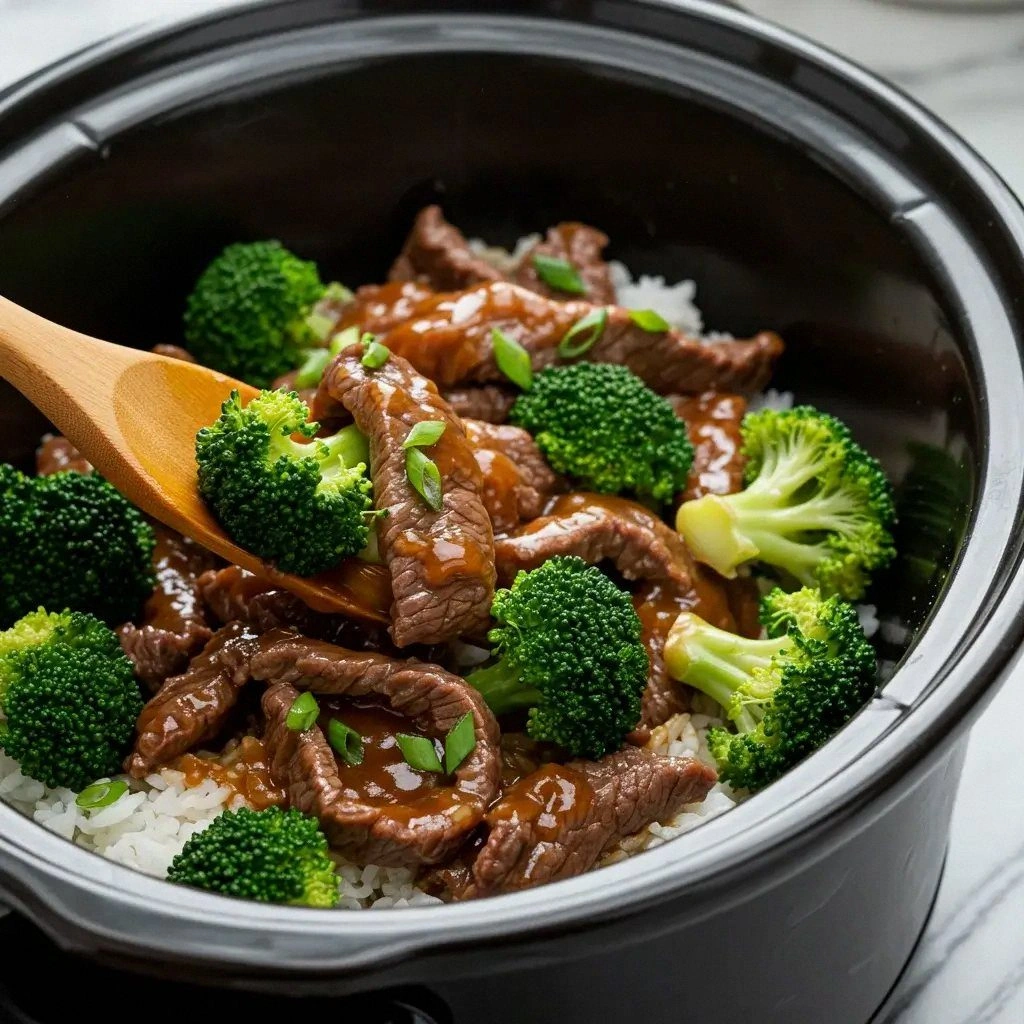
What makes this version of slow cooker beef and broccoli stand out isn’t just the ingredients; it’s the method that lets each component shine. By searing the beef first, I lock in a caramelized flavor that the slow cooker can’t replicate on its own. The sauce is thickened with cornstarch and a splash of water, giving it that silky finish that coats the noodles like velvet. And I added a splash of sesame oil at the end to give the dish that nutty finish that turns a simple meal into a restaurant-quality experience. I dare you to taste this and not go back for seconds—because it’s that good.
If you’re wondering why I’m so confident, let me walk you through every single step. By the end, you’ll wonder how you ever made it any other way. Picture yourself pulling this out of the slow cooker, the whole kitchen smelling incredible, and the plate looking like a work of art. And if you’ve ever struggled with this dish, you’re not alone— and I’ve got the fix. Stay with me here — this is worth it.
What Makes This Version Stand Out
- Taste: The sauce balances sweet, salty, and umami notes, creating a flavor profile that’s both comforting and bold. The gentle sweetness of brown sugar is countered by the savory depth of soy sauce and oyster sauce.
- Texture: The beef stays tender yet firm, thanks to a quick sear that locks in juices. Broccoli florets maintain a slight crunch, avoiding the mushy outcome common in many slow cooker recipes.
- Ingredient Quality: Using fresh ginger and garlic instead of powder elevates the aroma and taste, making every bite feel fresh.
- Speed: Even though it’s a slow cooker recipe, the sear step shortens overall cooking time, so you’re not waiting forever for a meal that tastes like it was simmered for days.
- Crowd Reaction: Friends who’ve tried the traditional take-out version always ask for the recipe—because this version is hands down the best you’ll ever make at home.
- Make‑Ahead Potential: The dish can be prepared ahead of time and reheated with minimal loss of flavor, making it perfect for busy weeknights.
Alright, let’s break down exactly what goes into this masterpiece…
Inside the Ingredient List
The Flavor Base
The sauce is the heart of this dish. Soy sauce brings salty depth, while oyster sauce adds a subtle brininess that balances the sweetness of brown sugar. Hoisin sauce contributes a hint of spice and complexity that makes the sauce feel layered rather than flat. Together, these sauces create a thick, glossy coating that clings to the beef and broccoli.
If you skip the oyster sauce, the dish will still taste good but will lack that savory depth that makes it feel like a restaurant meal. A good quality soy sauce is essential; a cheap one will taste metallic. For a vegan version, substitute tamari and a splash of maple syrup.
The Texture Crew
Broccoli florets are the star of the vegetable side. Fresh florets keep their color and crunch, but frozen ones work just as well if you let them thaw before cooking. The cornstarch slurry thickens the sauce, giving it that silky, coat-like consistency that makes every bite feel indulgent.
If you skip the cornstarch, the sauce will be thin and watery. You can substitute arrowroot or potato starch if you’re gluten‑free, but the texture will differ slightly. A good tip: mix the cornstarch with cold water before adding it to the slow cooker to avoid clumps.
The Unexpected Star
Fresh ginger and garlic are not just flavor enhancers; they’re the aromatic backbone that lifts the entire dish. Minced ginger adds a bright, peppery note that cuts through the richness of the sauce, while garlic provides a savory depth. Together, they create a fragrant foundation that makes the dish feel alive.
If you’re not a fan of garlic, reduce it by half; the dish will still work. Ginger can be ground into a paste if you prefer a smoother texture. Remember, the fresher the ginger, the more vibrant the flavor.
The Final Flourish
Sesame oil and sesame seeds add a nutty aroma and a subtle crunch that elevate the dish from ordinary to extraordinary. The oil is added at the end to preserve its delicate flavor, while the seeds provide a textural contrast that’s pleasing to the palate.
If you’re allergic to sesame, simply omit the seeds and oil; the dish will still be delicious. A pinch of red pepper flakes can add a touch of heat for those who like a bit of spice. Green onions finish the dish with a fresh, crisp note that brightens the overall flavor.
Everything's prepped? Good. Let's get into the real action…
The Method — Step by Step
- Heat a large skillet over high heat and add a splash of sesame oil. Quickly sear the beef strips in batches until they develop a golden crust; this caramelization locks in flavor and keeps the meat tender. Don’t overcrowd the pan—overcrowding causes the beef to steam rather than sear. This is the moment of truth: you’ll see the surface turn from raw pink to a deep, rich brown.
- Transfer the seared beef to the slow cooker. Add the minced garlic, ginger, and a splash of water to keep the mixture moist. The garlic should sizzle softly, releasing its aroma without burning. This step ensures the flavors stay concentrated and don’t get lost in the cooking process.
- In a small bowl, whisk together soy sauce, oyster sauce, hoisin sauce, brown sugar, and beef broth until the sugar dissolves. Pour this mixture over the beef, making sure each piece is coated. The sauce should look glossy and slightly thick; if it’s too thin, give it a minute to bubble before adding the next ingredient.
- Add the broccoli florets to the slow cooker, arranging them so they’re partially submerged in sauce. Cover and set the cooker to low for 3 hours or high for 1.5 hours. The broccoli should retain its bright green color and a slight bite, not become mushy.
- When the cooking time is up, stir in the cornstarch slurry to thicken the sauce. The slurry should be added in a slow stream while stirring constantly to prevent clumps. The sauce will start to bubble and thicken within a minute, giving it that glossy finish.
- Turn off the slow cooker and drizzle the remaining sesame oil over the dish. Sprinkle sesame seeds and green onions on top. Give the dish a final stir to distribute the aromatics evenly. The aroma should be intoxicating—like a savory, sweet, and slightly nutty perfume.
- Serve immediately over steamed rice or noodles. The sauce will cling to the grains, creating a harmonious blend of textures and flavors. If you’re feeling adventurous, add a splash of lime juice for a bright, citrusy contrast.
That’s it — you did it. But hold on, I’ve got a few more tricks that'll take this to another level. If you’re craving a little extra depth, keep reading. The next section is all about insider tricks that make the dish shine even brighter.
Insider Tricks for Flawless Results
The Temperature Rule Nobody Follows
Many cooks keep the slow cooker on low for the entire duration, but the secret is to start on high for the first hour, then switch to low. This initial high heat helps the sauce thicken faster and caramelizes the beef sugars, giving a richer flavor. After the first hour, lower the heat to let the flavors meld without overcooking the broccoli. This simple tweak results in a sauce that’s both thick and glossy, and a beef that’s tender but not mushy.
Why Your Nose Knows Best
Before you add the broccoli, give the sauce a quick sniff. If it smells slightly sweet and savory, you’re on the right track. If it smells too raw, give it a minute to bubble; the aroma will change as the sugars caramelize. Your nose is a reliable guide to flavor development, so trust it. A dish that smells like a summer garden with a hint of soy sauce is a recipe that’s ready to serve.
The 5-Minute Rest That Changes Everything
Once the slow cooker has finished, let the dish rest for five minutes before serving. This short pause allows the juices to redistribute, ensuring every bite is moist and flavorful. The sauce will thicken slightly during this rest, giving it that perfect consistency. A quick rest also gives the aromatics time to settle, making the dish more harmonious.
Use a Meat Thermometer for Precision
If you’re worried about the beef being overcooked, use a meat thermometer to check the internal temperature. Aim for 130°F for medium-rare; the slow cooker’s heat will bring the meat to that temperature within the cooking time. This ensures the beef stays juicy and not dry. A quick temperature check can save you from a disappointing meal.
Finish with Fresh Herbs for a Burst of Color
Right before serving, sprinkle fresh cilantro or parsley over the dish. The bright green garnish not only adds a pop of color but also provides a fresh, slightly peppery contrast to the rich sauce. This small touch elevates the dish from simple to sophisticated, making it Instagram-worthy.
The Final Touch: A Dash of Chili Oil
For those who love heat, drizzle a small amount of chili oil over the finished dish. The oil adds a subtle spice that pairs beautifully with the sweet and savory notes. It also gives the dish a glossy sheen that looks as good as it tastes. Try it in moderation to keep the dish balanced.
Creative Twists and Variations
This recipe is a playground. Here are some of my favorite ways to switch things up:
Asian Fusion Stir‑Fry
Swap the slow cooker for a wok and stir-fry the beef and broccoli quickly over high heat. Add a splash of rice vinegar and a pinch of sesame seeds for an extra zing. This version gives you a crispier texture and a brighter flavor profile that’s perfect for a quick lunch.
Spicy Szechuan Delight
Add Szechuan peppercorns and a handful of dried red chilies to the sauce for an authentic kick. The peppercorns give a numbing heat that balances the sweetness. Pair it with steamed jasmine rice for a complete meal.
Low‑Carb Keto Version
Serve the dish over cauliflower rice instead of regular rice to keep the carb count low. Reduce the amount of soy sauce slightly to lower sodium, and add a splash of coconut aminos for extra flavor. This keto-friendly version retains all the deliciousness while staying within your macros.
Vegan Twist
Replace the beef with thinly sliced seitan or tofu. Use a plant‑based soy sauce and add a dash of nutritional yeast for depth. The texture will be slightly different, but the sauce will still coat everything beautifully.
Breakfast Breakfast‑Style
Serve the beef and broccoli over fluffy scrambled eggs for a protein-packed breakfast. The sauce will mingle with the eggs, creating a savory, satisfying start to your day. Add a sprinkle of fresh herbs for a bright finish.
Gluten‑Free Option
Use tamari instead of soy sauce and cornstarch slurry to keep the dish gluten‑free. The flavor remains robust, and the sauce will still thicken nicely. This version is safe for those with gluten sensitivities without sacrificing taste.
Storing and Bringing It Back to Life
Fridge Storage
Cool the dish completely before transferring it to an airtight container. Store in the refrigerator for up to 3 days. The sauce may thicken as it cools, but it will reheat beautifully.
Freezer Friendly
For longer storage, divide the dish into freezer‑safe portions. Freeze for up to 3 months. When ready to eat, thaw overnight in the fridge and reheat gently on the stovetop or in the microwave.
Best Reheating Method
Reheat the dish on the stovetop over medium heat, adding a splash of water or broth to loosen the sauce. Stir frequently to prevent sticking. A quick 5‑minute rest before serving allows flavors to settle and the sauce to reach the perfect consistency.