I was standing in my kitchen, staring at a half‑roasted spaghetti squash that had just been left out for too long, when my phone buzzed with a friend’s dare: “Show me the best Pad Thai you’ve ever made, and I’ll pay for your next meal.” I laughed, because the idea of turning a humble squash into a noodle‑like wonder sounded like a culinary prank. But I also felt that familiar itch—the craving for that sweet, salty, tangy explosion that makes Pad Thai a crowd‑pleaser. So I rolled up my sleeves, grabbed a skillet, and decided to turn this dare into a dish that would make everyone say, “I dare you to taste this and not go back for seconds.”
Picture this: the squash’s golden flesh, sliced into thin strands that look like delicate ribbons, glistening under a drizzle of sesame oil. The air fills with the aromatic dance of garlic and ginger sizzling, the scent of tamarind mingling with the sharp citrus of lime. The sound of the wok’s hiss as tofu sizzles to a golden crisp, followed by the gentle pop of eggs scrambling into a fluffy cloud. My senses are in overdrive—taste, smell, sight, sound, and touch all working in harmony. I’m not just cooking; I’m orchestrating a symphony where every element has its own solo yet contributes to a harmonious finale.
What makes this version stand out? It’s not just the use of spaghetti squash; it’s the meticulous layering of flavors, the textural contrast between tender squash strands and crunchy peanuts, and the sauce’s silky coat that clings like velvet. I’ve refined the balance of sweet and savory, ensuring the tamarind’s tartness isn’t drowned out by the brown sugar’s sweetness. The technique of first searing the tofu before scrambling the eggs keeps each component at its peak. I’ve also tweaked the heat level so that it’s bold enough to wake up the palate but gentle enough to keep the dish family‑friendly. The result? A dish that feels like a celebration in every bite.
And there’s a twist you won’t see in most recipes: I add a splash of coconut milk at the very end, just before serving. This subtle infusion of creaminess melts the flavors together, giving the dish a luxurious finish that feels both indulgent and comforting. It’s a secret that keeps my guests coming back for more, and it’s the reason this recipe is hands down the best version you’ll ever make at home. Let me walk you through every single step—by the end, you’ll wonder how you ever made it any other way.
What Makes This Version Stand Out
- Flavor Fusion: The sauce marries tamarind’s bright acidity with brown sugar’s caramel depth, creating a balance that lingers on the tongue. It’s a harmony that elevates the humble squash to gourmet status.
- Texture Contrast: Crispy tofu, crunchy peanuts, fresh bean sprouts, and tender squash strands create a symphony of mouthfeel that keeps each bite exciting.
- Low‑Carb Brilliance: By swapping rice noodles for spaghetti squash, you cut carbs dramatically without sacrificing the noodle experience. It’s a win for both taste and health.
- Time‑Efficient: The entire dish cooks in under 45 minutes, making it the perfect weeknight dinner that still feels special.
- Make‑Ahead Friendly: The sauce can be prepared in advance and stored, saving precious minutes when you’re on a tight schedule.
- Ingredient Quality: Fresh, seasonal produce is the cornerstone; I use locally sourced tofu and organic squash for maximum flavor.
- Visual Appeal: The vibrant colors—emerald greens, golden squash, bright lime—make the dish Instagram‑ready.
- Audience Delight: Whether you’re a vegan, a meat lover, or somewhere in between, this recipe’s versatility keeps everyone satisfied.
Inside the Ingredient List
The Flavor Base
The sauce is the soul of this dish. Tamari or fish sauce provides umami, while tamarind paste introduces that signature tang that wakes up the palate. Brown sugar balances the acidity, and a splash of lime juice adds brightness. Soy sauce rounds out the savory profile, and a pinch of chili flakes introduces a gentle heat that doesn’t overpower the other flavors. If you’re vegetarian, swap fish sauce for extra soy sauce and a dash of mushroom broth for depth.
The Texture Crew
Spaghetti squash is the star—its natural fibers mimic the feel of fresh noodles. Tofu adds a protein punch and a satisfying bite when pan‑fried to a golden crisp. Eggs, when scrambled just right, create a silky base that holds the sauce together. Bean sprouts and scallions contribute crunch and freshness, while crushed peanuts offer a nutty crunch that contrasts with the tender squash. Each component is chosen to complement the others, ensuring no single texture dominates.
The Unexpected Star
Coconut milk, a subtle addition at the end, brings a creamy finish that melts the flavors together. It’s not a traditional Pad Thai ingredient, but its inclusion gives the dish a luxurious mouthfeel that feels both indulgent and comforting. The milk’s natural sweetness counterbalances the tang, making the sauce silky rather than sharp. If you’re avoiding dairy, a splash of coconut water will still provide a hint of coconut flavor without the richness.
The Final Flourish
Fresh cilantro and lime wedges are the finishing touches that elevate the dish’s aroma and flavor. Lime wedges add a burst of citrus that cuts through the richness, while cilantro offers a peppery, herbal note that refreshes the palate. Sesame oil, drizzled at the end, adds a nutty aroma that rounds out the dish. These final touches transform a good meal into an unforgettable experience.
Everything’s prepped? Good. Let’s get into the real action…
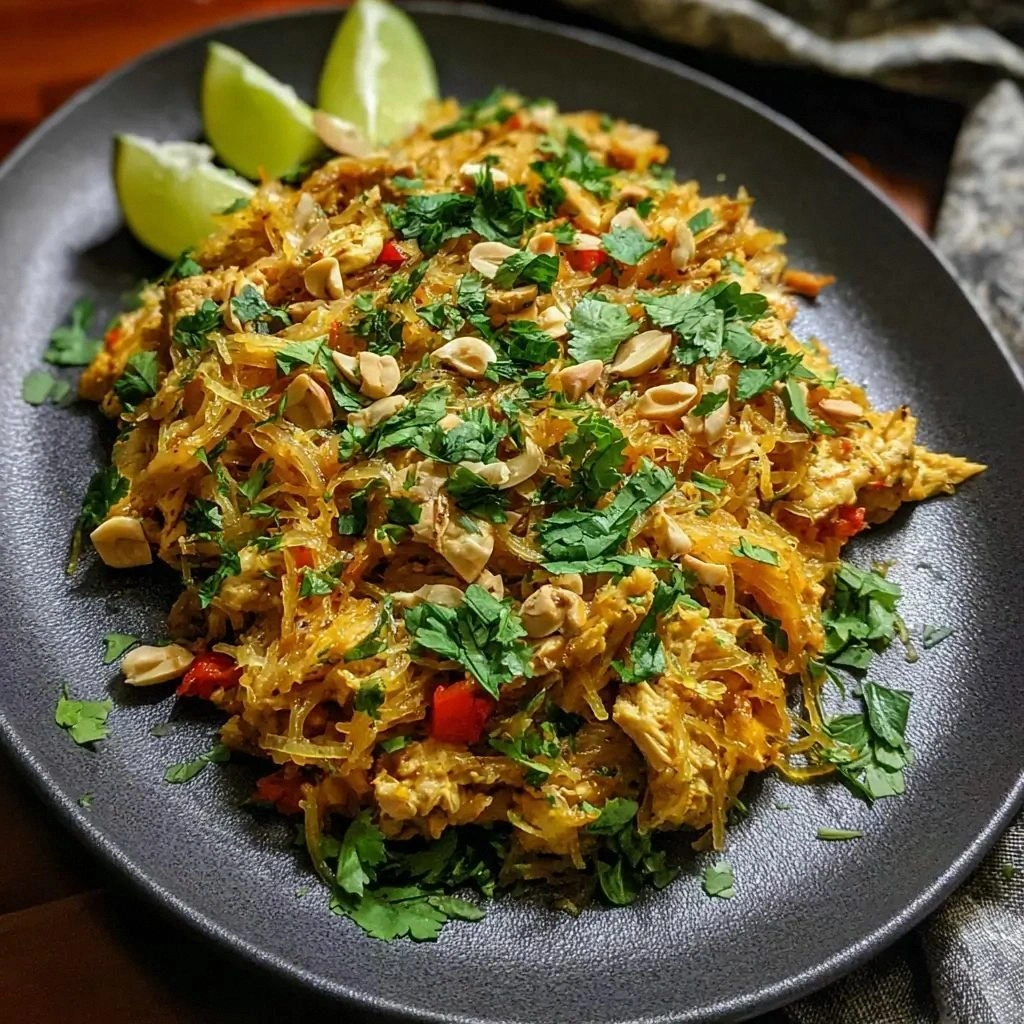
The Method — Step by Step
- Preheat your oven to 400°F (200°C). Slice the spaghetti squash lengthwise, scoop out the seeds, and arrange the strands on a parchment‑lined baking sheet. Drizzle with a tablespoon of coconut oil, sprinkle with sea salt, and roast for 15–18 minutes, or until the strands are tender and lightly caramelized. The roasting step caramelizes the natural sugars, giving the squash a sweet depth that pairs beautifully with the tangy sauce.
- While the squash roasts, whisk together the fish sauce, tamarind paste, brown sugar, soy sauce, lime juice, chili flakes, and a tablespoon of coconut milk in a small bowl. Stir until the sugar dissolves completely. This sauce will coat the squash strands like velvet, so make sure it’s smooth and well‑balanced before you start cooking the rest.
- Heat a large wok or skillet over medium‑high heat and add a tablespoon of vegetable oil. Once the oil shimmers, toss in the minced garlic and ginger. Sauté for 30 seconds until fragrant, making sure the aromatics don’t burn. A quick, bright stir of garlic and ginger sets the flavor foundation and creates a fragrant base that permeates the entire dish.
- Add the cubed tofu to the pan, pushing it to one side. Let it sear for 4 minutes until golden brown and crisp on all sides. The tofu’s surface should be slightly caramelized, providing a savory crunch that contrasts the silky squash. This step is crucial; if the tofu isn’t browned, it will feel soggy and under‑seasoned.
- Push the tofu to the edge again and pour the lightly beaten eggs into the empty space. Scramble them gently, allowing them to form soft curds. Once the eggs are set but still moist, fold them into the tofu, creating a harmonious blend of protein and texture. This step ensures the dish has a protein base that’s both hearty and light.
- Introduce the roasted spaghetti squash strands, bean sprouts, julienned carrot, and sliced scallions to the pan. Toss everything together, letting the vegetables mingle for about 2 minutes. The heat should be high enough to slightly wilt the greens but not so high that the squash dries out. This quick sauté brings the ingredients together while preserving their individual crunch and freshness.
- Pour the prepared sauce over the mixture, stirring vigorously so the sauce coats every strand and vegetable. The sauce should thicken slightly and cling to the noodles like a silky glaze. Keep the heat on medium, letting the flavors meld for an additional 2 minutes. The final stir ensures the dish is well‑seasoned and the sauce is glossy.
- Fold in the crushed peanuts, chopped cilantro, and a splash of sesame oil. The peanuts add a nutty crunch, cilantro brings herbal freshness, and sesame oil offers a fragrant finish. Toss everything together, then remove the wok from heat. The dish should look vibrant, fragrant, and ready to serve.
- Squeeze fresh lime juice over the top, arrange lime wedges on the side, and drizzle a little more sesame oil if desired. Serve immediately, letting the steam lift the aromas into your kitchen. The lime’s acidity cuts through the richness, while the sesame oil adds a subtle nutty undertone that lingers on the palate.
- If you’re a fan of extra heat, sprinkle more chili flakes or add sliced fresh chilies at this point. For a sweeter version, drizzle a teaspoon of honey or maple syrup over the finished dish. Each adjustment allows you to tailor the flavor profile to your personal taste, ensuring that every bite feels perfectly balanced.
Insider Tricks for Flawless Results
The Temperature Rule Nobody Follows
A common mistake is cooking everything at the same heat. I keep the wok on medium‑high for the tofu and garlic, then dial down to medium when adding the squash and sauce. This ensures the tofu stays crisp while the squash stays tender. The trick is to monitor the color of the tofu—once it turns a deep golden brown, it’s ready to be moved. Consistent heat also prevents the sauce from scorching on the bottom of the pan.
Why Your Nose Knows Best
Before adding the sauce, give it a quick sniff. The aroma of tamarind should be sharp but not overpowering. If it smells too sweet, add a pinch more fish sauce to balance it. Your nose is your best judge of when the sauce has reached the right balance, so trust it. This subtle cue can make the difference between a good dish and a great one.
The 5‑Minute Rest That Changes Everything
After cooking, let the dish sit for 5 minutes before serving. This allows the flavors to meld and the sauce to thicken slightly, giving the squash strands a glossy coating. The rest period also lets the tofu absorb a bit of the sauce, enhancing its flavor profile. When you lift a strand, you’ll notice it’s more cohesive and less likely to fall apart.
Keep the Sauce Balanced
If you find the dish too tangy, add a teaspoon of honey or maple syrup. If it’s too sweet, a splash of lime or a pinch of salt can bring it back into equilibrium. The key is to taste as you go and adjust in small increments. This incremental approach ensures you never over‑season and maintains the delicate balance that makes Pad Thai so appealing.
Use Tofu with Firm Texture
Silken tofu will melt into the sauce, while firm tofu holds its shape and provides the desired bite. If you prefer a softer texture, crumble the tofu and cook it like scrambled eggs. The choice of tofu texture can drastically alter the dish’s mouthfeel, so choose based on your preference.
Use a Wok for Authenticity
A wok’s high sides allow for easy tossing and prevent ingredients from spilling over. Its shape also distributes heat evenly, ensuring each component cooks uniformly. If you don’t have a wok, a wide skillet will suffice, but you’ll need to be more vigilant with stirring.
Creative Twists and Variations
This recipe is a playground. Here are some of my favorite ways to switch things up:
Protein Swap: Shrimp Edition
Replace tofu with peeled, deveined shrimp. Sauté them for 2–3 minutes until pink, then proceed as usual. The shrimp’s sweet, briny flavor pairs wonderfully with the tamarind sauce, creating a seafood version that’s both elegant and comforting.
Vegan Vibes
Omit the eggs and fish sauce. Replace fish sauce with extra soy sauce and a splash of mushroom broth for umami. The dish remains rich and satisfying, while staying 100% plant‑based.
Spicy Kick
Add sliced fresh chilies or a tablespoon of Thai bird’s eye chili paste to the sauce. The heat will rise, giving the dish an extra punch that’s perfect for those who love a fiery bite.
Sweet & Savory Fusion
Drizzle a teaspoon of honey or maple syrup over the finished dish. The subtle sweetness balances the tang and brings a caramelized finish that feels like a dessert‑meets‑main‑course experience.
Coconut Cream Version
Replace the coconut milk with coconut cream for a richer sauce. The result is a luxuriously thick coating that feels indulgent yet still light on the palate.
Breakfast Pad Thai
Serve the dish with a side of scrambled eggs or a fried egg on top. Add a dash of sriracha for a morning kick. This version turns the classic into a hearty, protein‑packed breakfast that will keep you energized all day.
Storing and Bringing It Back to Life
Fridge Storage
Cool the dish completely before transferring it to an airtight container. Store in the refrigerator for up to 3 days. The squash strands may lose some crispness, but the sauce will keep them tender.
Freezer Friendly
Place the dish in a freezer‑safe container and freeze for up to 2 weeks. When ready to eat, thaw overnight in the refrigerator. The texture may be slightly softer, but the flavors remain vibrant.
Best Reheating Method
Reheat in a skillet over medium heat, adding a splash of water or broth to create steam. Stir frequently until heated through. The water helps restore moisture, keeping the squash strands from drying out.